September Dates Shouldn't Cost You a Costa Rica Trip
Costa Rica runs two rainfall calendars at once. If your dates are locked in the green season, the fix is usually your route, not your calendar.
 Dallas Rogers
In short: Costa Rica's Caribbean coast does not share the Pacific's rain calendar. Around September and October, when the Pacific side is at its wettest, the Puerto Viejo and Cahuita stretch is usually in one of its brightest, calmest windows of the year. So if your dates are locked and everyone keeps telling you that you picked the worst two months, you may not have a dates problem. You may have a routing problem, and that one is fixable.
Most people arrive at this question the same way. The flights are booked, the time off is approved, and then a forum thread says September is the rainiest month of the year. The threads are full of this exact worry. "Is it worth travelling to Costa Rica in September in the wet season?" "Costa Rica in sept-oct, adventure or a waste?" "La Fortuna vs. Puerto Viejo mid-September."
Here is the part those threads usually get right, and the part they almost always leave out.
Does the Caribbean coast really stay drier in September and October?
Broadly, yes. Costa Rica is not one climate. A mountain spine splits the country and each slope answers to a different ocean, so the Caribbean side does not follow the Pacific's May to November wet season at all. Late September and October are widely described as the Caribbean's calmest, brightest stretch, which is exactly when the Pacific and the mountains are at their soggiest. Check the current outlook with Costa Rica's Instituto Meteorológico Nacional before you move anything.
Two honest caveats, because this gets oversold.
It is a tendency, not a guarantee. The Caribbean coast gets rain in every month of the year. What changes in this window is usually the character of it: shorter, brighter, more of a warm afternoon downpour than a grey week. And a single storm system can still rearrange any forecast, on either coast.
Second, "drier than the Pacific in September" is a comparison, not a promise of sunshine. Pack for rain anyway. Everyone who lives here does.
Your dates are not the problem. Your route is.
This is where most seasonal guides stop, right when the useful part begins. Knowing the Caribbean is drier does not tell you what to do about a half-built Pacific itinerary. You have three real options, and the right one depends on how many days you have and what is already anchored.
Option | What it means | Fits you if | What it costs you |
|---|---|---|---|
Swap | Rebuild the trip around the Caribbean side: Puerto Viejo, Cahuita, Manzanillo, Punta Uva | You have 7 days or fewer, nothing is prepaid, and weather certainty matters more than a specific sight | You give up the classic Arenal and Monteverde loop this time |
Split | Keep one Pacific or mountain anchor, then cross to the Caribbean for the back half | You have 10 days or more and can afford to spend travel days getting across the country | Two long transfer days, and a lot of packing and unpacking |
Stay | Keep the Pacific plan and build in rain flexibility instead | Lodging is prepaid, or your trip is built around something only the Pacific has | You accept wetter afternoons and plan mornings hard |
The decision that trips people up is Split. On paper it looks like the best of both. On a calendar it can quietly eat a fifth of a short trip, because crossing Costa Rica coast to coast is not a transfer you slot between breakfast and lunch.
So count travel days before you fall in love with the idea. Not nights. Days.
If Stay is where you land, that is a legitimate answer and not a consolation prize. Our green season guide covers how to build a Pacific trip that works in the wet months, which mostly comes down to front-loading your mornings.
What crossing the country actually involves
San José to Puerto Viejo is a serious drive, and the honest framing is a long stretch of the day rather than a quick hop.
The route matters more than the distance. The main artery to the Caribbean climbs through Braulio Carrillo National Park, which is steep, beautiful, frequently wrapped in cloud, and the single most weather-exposed piece of road in this plan. It has a real history of landslide and roadwork closures, which is precisely why anyone routing a Caribbean trip in the rainy months should check its status close to the date rather than at booking.
If you are weighing this leg against the rest of your itinerary, our San José to Puerto Viejo route notes cover the ground options, and getting around Costa Rica sets out how the transfer choices compare in general.
What the Caribbean side gives you that the Pacific cannot
Now the part worth rerouting for.
Limón province feels like a different country from Guanacaste or the central Pacific, and that is the point. The food changes first: rice and beans cooked in coconut milk, patí pastries, rondón simmered slow. You will hear Spanish alongside Mekatelyu, the local English creole, and you are near Bribri and Cabécar territory with a cultural depth that has nothing to do with resorts.
The water changes too. Cahuita National Park protects a living coral reef, so on a calm morning here you get flat, clear water over something actually worth snorkelling, which is a genuinely different offer from the Pacific's sediment-heavy green season swells. The park is managed by SINAC, and current fees, hours and reef access rules should come straight from them.
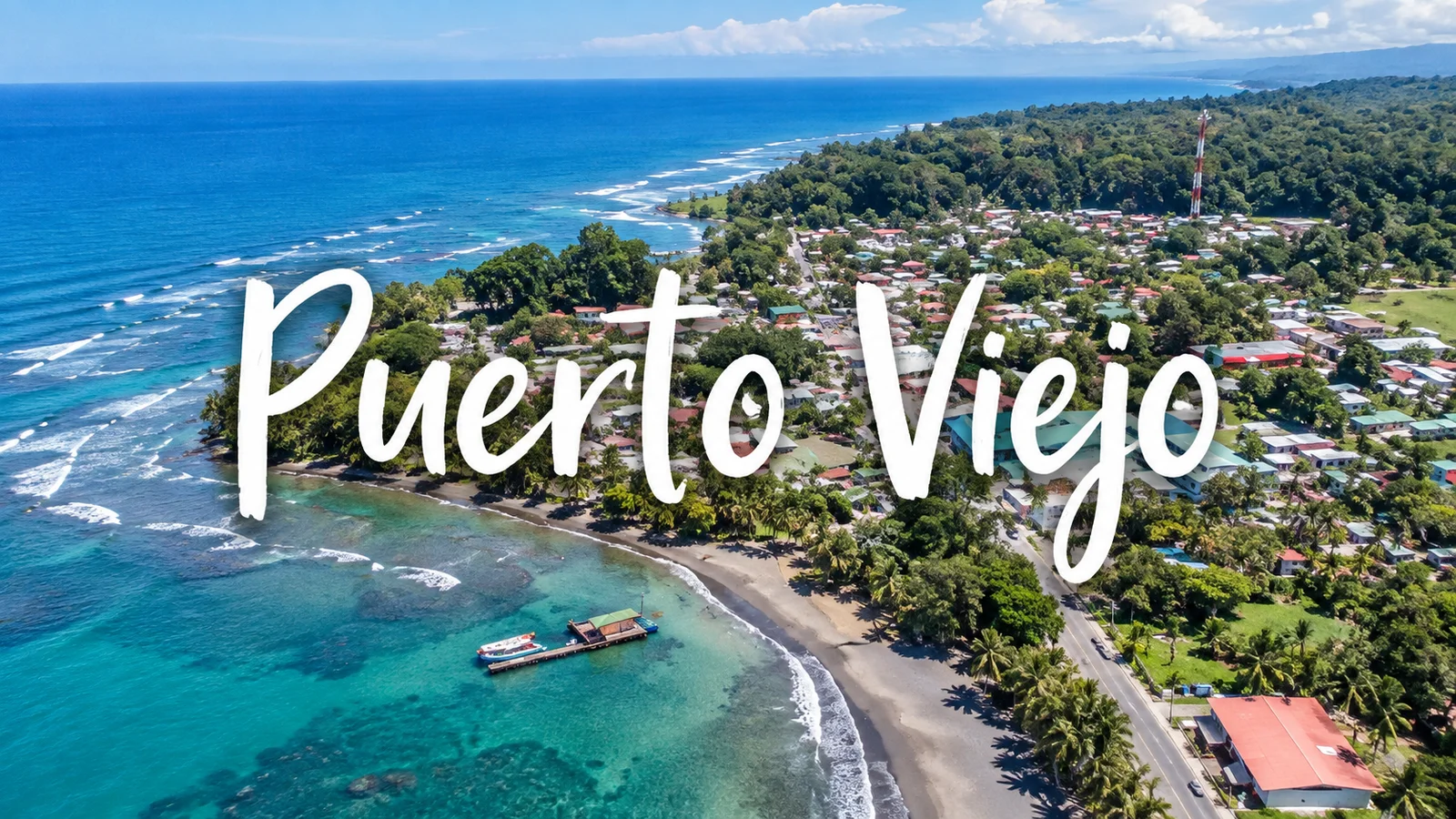
Then there is the stretch of coast south of town toward Punta Uva and Manzanillo, where the road runs through jungle right up against the sand, sloths move through the branches overhead at their own unbothered pace, and the beaches thin out the further you go. Start with Puerto Viejo's beaches and the Cahuita National Park guide if you want to see what a Caribbean week could actually hold, the Puerto Viejo travel guide for the wider picture, and where to stay in Puerto Viejo if you get as far as choosing a base.
Tortuguero also sits on this coast and runs on a turtle nesting calendar of its own, which can be a strong reason to come at this time of year or a reason to wait, depending on your exact dates.
Who should not reroute
We would rather talk you out of this than sell you a trip that does not fit.
Do not reroute if your lodging is prepaid and non-refundable. The weather upside rarely beats a forfeited booking.
Do not reroute if your trip has one non-negotiable anchor on the other side of the country. If the whole point is a volcano view or a cloud forest morning, the Caribbean is not a substitute for it, and Monteverde versus La Fortuna is the better question for you.
Do not reroute for surf unless you know what you are signing up for. Salsa Brava is a heavy, shallow reef break with a reputation earned the hard way, and it is not a learning wave.
And go in clear-eyed about the ocean. Several beaches along this coast have strong currents and no lifeguard. Ask locally which beach is safe on the day you are standing there, every day, and take the answer seriously. That advice is not seasonal.
The one question to ask before you rebook anything
We live and work on the Pacific side, in the Manuel Antonio area, so we watch this season from the inside every year. The version of this question we can actually answer well is not "is September bad." It is this:
Given your exact dates, your flights, and the one thing you refuse to miss, is the Caribbean worth the transfer days?
That answer is different for a couple with 12 days and no prepaid lodging than it is for a family with 6 days and a booked hotel in Quepos. It is not a blog-post answer. It is a conversation.
So tell us your dates and your anchors, and ask us which of the three options above actually fits. Send a message with what is already booked and what is still open, and we will tell you honestly if your plan is fine as it is. Sometimes it is.
Pura Vida 🌿 Dallas & Marta
Where these facts come from
Regional climate and season patterns: Instituto Meteorológico Nacional (IMN), Costa Rica's national weather service.
National park access, reef rules and nesting seasons: Sistema Nacional de Áreas de Conservación (SINAC).
Traveler questions quoted above: public r/CostaRicaTravel threads and Costa Rica travel groups, collected September 2026.
Toorizta is how modern travelers plan, book and share Costa Rica trips. Open the app to build your own.
Open the Toorizta app