Is Puerto Viejo safe to visit alone? Start with where you sleep
The two contradictory answers online are both true. Here is what actually changes your risk on Costa Rica's Caribbean coast.
 Dallas Rogers
The short version. Puerto Viejo de Talamanca is a place most solo travelers visit without incident, and it is also a place where two things genuinely go wrong: the unlit coast road after dark, and the water. Both are settled by decisions you make when you book, not by how alert you manage to be at midnight. Choose your base and your way home first, and the rest of the safety advice shrinks to ordinary travel sense.
Why every answer you have read contradicts the last one
If you have spent an evening in the forums on this, you have seen the two answers sitting right next to each other. One says Puerto Viejo is as safe as anywhere else in the country and spectacular. The next says young women should use caution. Both are written by people telling the truth.
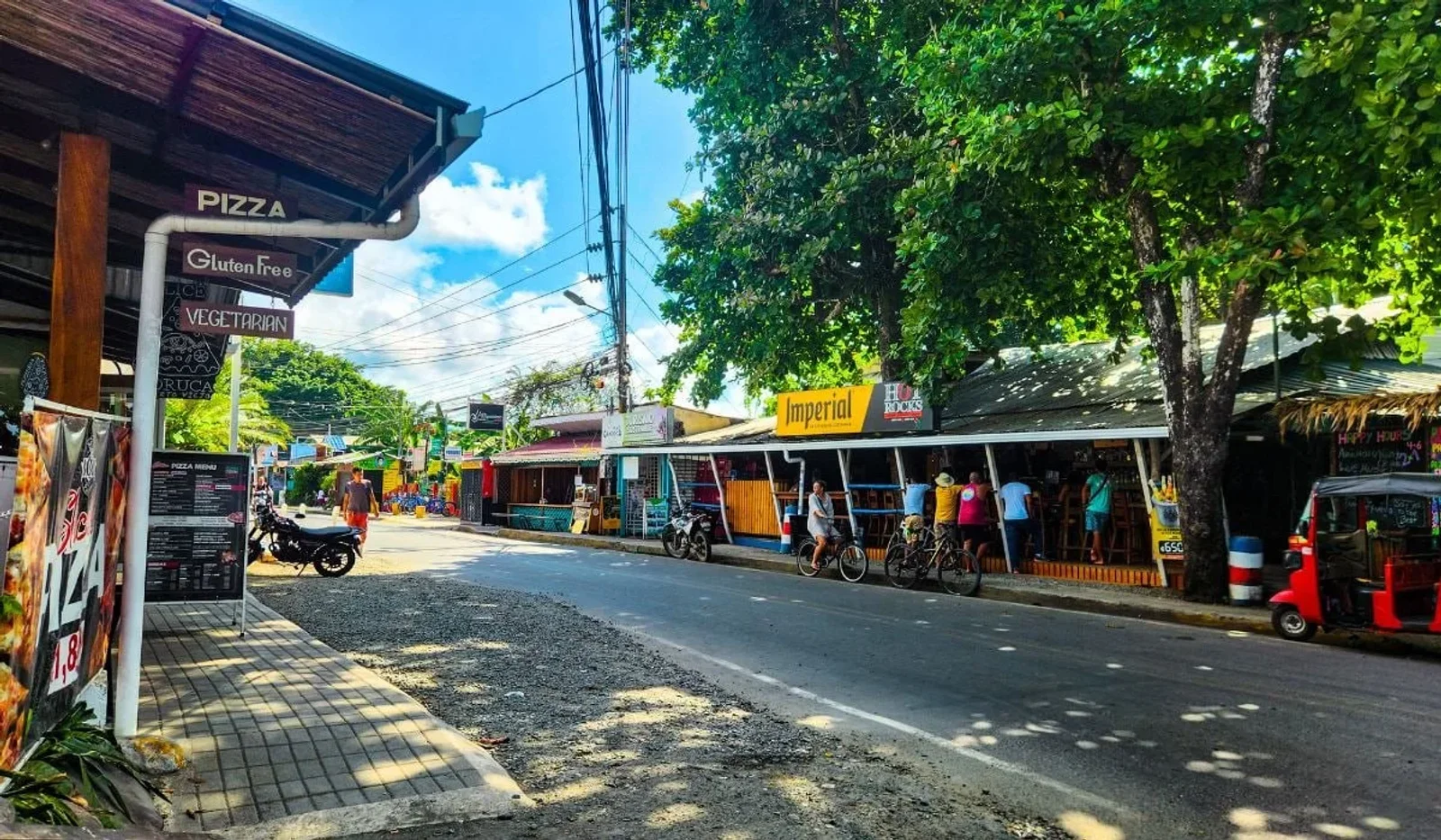
They are describing different Puerto Viejos. One is the strip of bars in town at two in the morning. The other is a porch at Punta Uva at dusk, cicadas starting up, nobody on the sand. Same district, completely different exposure, and the distance between them is mostly a booking decision.
That is the part the safety checklists skip. They tell you to keep your bag zipped and your phone out of your hand, which is fine advice and roughly what you would do in any beach town anywhere. They do not tell you the thing that actually moves the number, which is where you sleep and how you get home.
What the official advisories actually say
Worth reading before the forums, because they are specific and they carry dates.
The Government of Canada's travel advice for Costa Rica sits at exercise a high degree of caution, and the page was last updated on 9 September 2026. Puerto Viejo is named in it twice: once under petty crime on the Caribbean coast, once under assaults. That is a country-level advisory naming a small town, which is worth knowing, and it is a long way from a warning to stay away.
The U.S. State Department's Costa Rica advisory reads exercise increased caution, due to crime, and its guidance is plain: stay aware of your surroundings, avoid walking alone on poorly lit beaches or streets, do not physically resist a robbery, do not display signs of wealth.
Read the two together and something useful falls out. The advisory language about crime is measured. The language about water is not. The same State Department page says Costa Rican beaches have dangerous rip currents and that people drown in Costa Rica every year. The risk the officials treat most seriously is the one almost nobody searches for. Our Costa Rica safety guide covers the country-wide version of all this.
The three things that actually go wrong, in order
1. The road after dark
Puerto Viejo is a small town with one road running south along the coast toward Cocles, Punta Uva and Manzanillo. Outside the centre, that road has very little lighting, no real shoulder, and jungle pressing in on both sides. Walking or cycling it late, alone, without lights is the most avoidable risk in the area, and it is avoidable for the price of a short taxi ride.
This is also exactly where the two contradictory forum answers come from. Travelers who stayed in town and walked two lit blocks home report nothing at all. Travelers who stayed down the coast and cycled back after midnight are the ones with stories.
2. The water
The Caribbean here is beautiful and it is not a swimming pool. Salsa Brava, the reef break off town, is an expert wave breaking over shallow reef, and it is not a place to try surfing for the first time. Conditions on the beaches shift day to day rather than season to season, and the calmer swimming is generally further south along the coast.
The old rule is the good one: if you walk down to a beach and nobody local is in the water, that is information. Ask at your hotel before you swim somewhere new rather than after. If you want the beach-by-beach version, that is what our Puerto Viejo beaches guide is for.
3. Opportunistic theft
Phones and bags, not confrontation. Left on a towel while you swim, sitting in a bike basket while you order a coffee, in your hand while you walk through a crowd. None of this is specific to Puerto Viejo and the fix is the boring one: take it into the water with you, or leave it where you are staying.
The decision that does most of the work
Where you base yourself changes more about your trip, including the safety part of it, than any habit you can adopt once you arrive.

| Where you stay | Fits the solo traveler who | The problem you have to solve |
|---|---|---|
| In town | Wants people around every evening, late food, and a walk home measured in minutes | The noisiest option, and the bar strip is the Puerto Viejo the cautionary posts are usually describing |
| Playa Negra, just north | Wants town on foot in daylight and quiet at night | Still a dark walk if you stay out late, so the ride home needs a plan |
| Cocles, a few minutes south | Wants the beach at the door with town in easy reach | You will be moving along the coast road most days, so wheels or taxis stop being optional |
| Punta Uva and Manzanillo, further down the coast | Wants calm water, quiet, and wildlife outside the window | Furthest from restaurants and nightlife, and the most planning-dependent after dark |
None of these is the safe one with the others as the risky ones. They hand you different problems. A solo traveler who wants company every evening and a solo traveler who wants a hammock and a book will be happier, and safer, in different places on the same short stretch of coast. Our where to stay in Puerto Viejo guide goes area by area.
How you get home after dark
This is short because it is the whole answer. Take a taxi. Not because Puerto Viejo is frightening, but because the alternatives are cycling an unlit road with no shoulder or walking one, and neither is a good idea anywhere on earth. Bikes are the right way to move around this coast in daylight and the wrong way to come home at eleven. Save your accommodation's number and a driver's number on day one, before the evening you need them.
Travelling solo as a woman
Worth saying straight, because the threads do. Alongside the reassurance you will also find women describing persistent attention from men, particularly around the bar strip at night. That is a real report from real travelers. It is not a crime statistic and it should not be waved off with a line about being aware of your surroundings.
What it changes in practice is small and concrete. If this is your first solo trip, choose somewhere with people around rather than an isolated cabina. Go out with people you met in daylight rather than people you met at one in the morning. Decide how you are getting home before you go out, not after. And drink safety here is the same as in any bar town: do not leave a drink unattended, and do not accept one you did not watch being made.
Plenty of women travel this coast alone and love it. The point is not to pretend the caution posts are noise.
Numbers to put in your phone before you land
- 911 is Costa Rica's emergency number for police, fire and ambulance, per the Costa Rica Tourism Board's important numbers page.
- 800-TURISMO (800-887-4766) is the tourist assistance line the U.S. State Department advisory points travelers to from inside Costa Rica.
- Your accommodation's WhatsApp, saved before you arrive rather than from the side of a road.
The honest summary
Puerto Viejo earns its reputation in both directions. It is one of the most distinctive corners of Costa Rica: Afro-Caribbean cooking, music you hear before you see where it is coming from, cacao, a coastline that looks nothing like the Pacific side. It is also a small town where an unlit road and a strong sea cause more trouble than crime does, and where a plan made at six in the evening is worth more than vigilance at midnight.
So decide two things before you book: where you sleep, and how you get home. Everything else on the safety lists is the same sense you would use in any beach town. If you are still working out how to get there in the first place, we have written up the San José to Puerto Viejo run, and the full Puerto Viejo travel guide covers the rest, including what there actually is to do once you get here.
Ask us
If you are weighing Puerto Viejo for a solo trip and you cannot tell from the internet whether it is your kind of place, ask us. Tell us how you like to spend an evening and whether this is your first solo trip, and we will tell you which stretch of this coast fits you, which one we would steer you away from, and how we would handle the evenings. We are based in Costa Rica and we plan trips here for a living, so we will say plainly if the honest answer is that somewhere else suits you better.
Pura Vida. 🌿
Toorizta is how modern travelers plan, book and share Costa Rica trips. Open the app to build your own.
Open the Toorizta app