Where to Stay in Montezuma: the Town, the Hill, or the Cabuya Side
Three very different Montezumas sit within a few kilometres of each other. Here is how to pick the one that fits the mornings you actually want.
 Marta Daví
Short answer. Sleep in the town itself if you want to walk to dinner, to the beach and to the waterfall trail without touching a car. Sleep on the hill above town if a view over the bay and cooler, quieter nights matter more to you than the walk home. Sleep out along the Cabuya road only if the Cabo Blanco reserve and near empty coastline are the reason you came, and check the reserve's open days before you lock your nights, because it is closed on Mondays and Tuesdays.
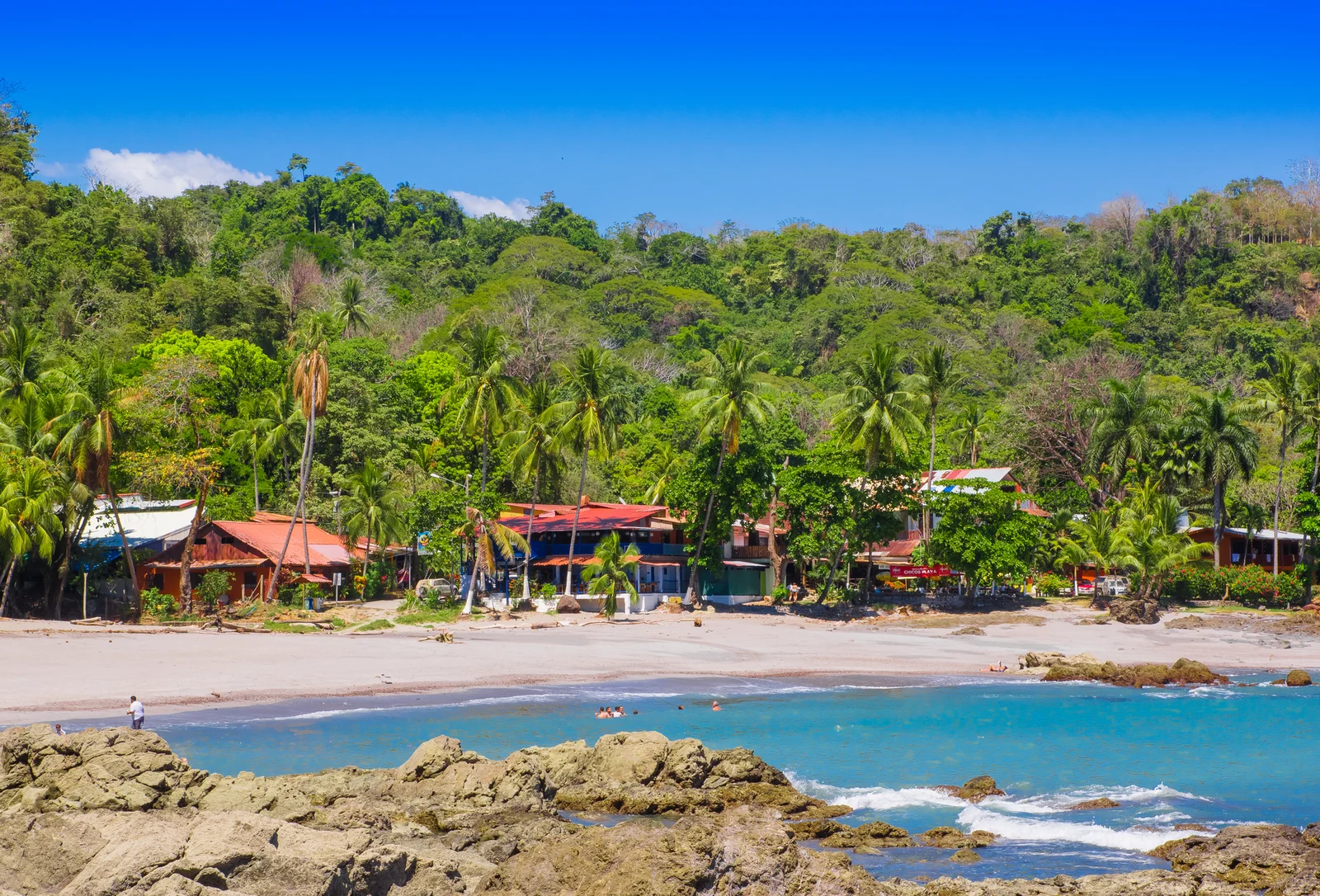
Every "where to stay in Montezuma" page you will find is a list of hotels. That is not the decision. Montezuma is a tiny place in the Cóbano district at the bottom of the Nicoya Peninsula, and its geography does more to shape your week than any room photo. The town sits at sea level in a pocket of jungle where the road runs out. Behind it, the land climbs hard. Beyond it, one coast road carries on toward Cabuya and the oldest protected forest in the country. Those are three different holidays.
The town: a few streets, and everything on foot
Waking up in the centre means you hear surf and birds before you hear a vehicle. You can be in the water before breakfast, buy a coffee in flip flops, and start the walk up to the waterfall from the edge of town. Dinner is a two minute stroll rather than a drive and a designated driver conversation.
This is the right base if you are the kind of couple who would rather leave the car parked for four days, or if you are not renting one at all. It is also the base that makes a short stay work, because nothing costs you travel time.
The tradeoffs are honest ones. The water in front of town is rock, tide pool and current rather than one long easy swimming beach, and the calmer sand takes a walk up the coast. Rooms in the centre are close to the small cluster of bars and restaurants, which is charming on a Tuesday and louder on a weekend night when music carries down the street. If you sleep lightly, ask for a room set back from the main street before you book, not after.
The hill: the view, the breeze, and the walk you will actually do
Montezuma's hillside, on the road that climbs out toward Cóbano, is where you find the casitas and small hotels with a pool, a balcony and a line of Pacific in front of you. Mornings up there feel different: more breeze, more birds, and a bay that turns silver at sunrise.
The cost is the slope. It is a genuine climb, steep enough that the walk down for dinner is easy and the walk back up in the dark is a decision. Some couples love that separation and settle into cooking a night or two. Others discover on night one that they will be calling a taxi every evening, which is fine when you plan for it and irritating when you do not.
Book the hill if your holiday is the terrace, the swim, the book and the long view. Book the town if your holiday happens in the streets.
The Cabuya side: the reserve at your doorstep, and little else
Keep going past Montezuma and the coast road takes you toward Cabuya, a scattered village near the Cabo Blanco entrance. This is where you sleep if wildlife and quiet are the entire point. The trees come down to the water, the road is dirt, and the evening entertainment is the sky.
It is also the base that goes wrong most often, because people book it for reserve access without checking the reserve's week. Cabo Blanco does not open every day.
Cabo Blanco, from the source
Reserva Natural Absoluta Cabo Blanco | Detail |
|---|---|
Open | Wednesday to Sunday, 8 a.m. to 4 p.m. |
Closed | Monday and Tuesday |
Non resident adult | $12 |
Non resident child, 2 to under 12 | $5 |
Resident | 1,600 colones |
Source: SINAC's published entry schedule for protected wild areas, Tarifas de ingreso a áreas silvestres protegidas, read on 26 September 2026. Fees and open days do change, so confirm before you travel.
Read that table next to your calendar. If your two nights on the Nicoya are a Monday and a Tuesday, the reserve is not part of the trip, and paying for isolation near a closed gate is the wrong move. Sleep in town those nights, walk to the waterfall, and save Cabo Blanco for a trip with the right days in it.

Montezuma or Santa Teresa: should you base here at all?
Travellers ask this constantly, usually in the form of "stay in one and visit the other?" Our answer is to pick by what you want the mornings to be, then commit.
Choose Montezuma | Choose Santa Teresa | |
|---|---|---|
Mornings look like | A walk to a waterfall, tide pools, a reserve trail | A surf lesson, a long beach, a smoothie bowl |
Evenings look like | Small restaurants, a walkable centre, early quiet | A long strip of beach clubs and dinner spots |
Getting around | Walkable core, taxis for the hill and Cabuya | You will want wheels for the length of the strip |
Feels like | A village that kept its own character | A beach town that is growing fast |
They sit close together on a map. The drive between them runs inland and takes longer than the map suggests, so a day trip eats a real slice of your day in each direction. If you have five nights or more on the southern Nicoya, splitting them is lovely. With two or three nights, picking one and going deeper beats shuttling.
Before you book any of them, ask six questions
How far is the room from the centre on foot, after dark, with no streetlight?
Fan or air conditioning, and is there hot water?
Does the driveway need a high clearance vehicle after rain?
Is breakfast included, or is the nearest kitchen a walk away?
Which nights have music nearby?
Is there a safe place to leave a car, if you are bringing one?
That list matters more here than in a resort town, because these are small, owner run places rather than standardised hotels. That is exactly why people love the southern Nicoya, and exactly why a room description can leave out the hill.
One planning note for arrival day. Montezuma is behind either a ferry crossing or a long drive around the Gulf of Nicoya, so the hour you arrive decides whether your first night is dinner on the beach or a tense drive on a dark dirt road. Build the base decision and the arrival decision together, not separately. Our guide to getting around Costa Rica covers the tradeoffs between driving yourself, a shared shuttle and a private transfer.
If you are travelling between May and November, read the green season guide too. Warm afternoon rain is normal, mornings are often clear, and the only thing it really changes about this decision is how much you care about a steep dirt driveway.
How we would choose it for you
We plan the base around the days you want, in that order: what you want to wake up to, which single day is non negotiable, then the room. On this coast that usually means the reserve day sets the calendar, the walk home sets the neighbourhood, and the view is the last thing we solve for, not the first.
Tell us your dates, whether the Cabo Blanco day matters to you, and how far you are willing to walk after dinner. Ask us and a real person will tell you which part of Montezuma to sleep in, and which nights to put where. If you are still weighing up the whole Nicoya coast, our Nosara guide covers the wellness and surf end of the peninsula, and the same base logic runs through how couples choose a Caribbean base by the walk home on the other side of the country. If it is the budget you are sizing up, start with what a Costa Rica trip actually costs.
Toorizta is how modern travelers plan, book and share Costa Rica trips. Open the app to build your own.
Open the Toorizta app