Why couples choose their Caribbean base by the walk home, not the town name
Puerto Viejo, Cahuita, or the beach road south of town. The honest tradeoffs before you book.
 Dallas Rogers
In short: on Costa Rica's southern Caribbean coast, you are not really choosing between two towns. You are choosing how far you are willing to be from dinner once the light goes. Cahuita and central Puerto Viejo both let you walk. The beach corridor south of Puerto Viejo mostly does not, and that one fact quietly shapes every evening of the trip.
Most comparisons of Puerto Viejo and Cahuita describe atmosphere. One is livelier, one is calmer. That is true, and it is not the part people get wrong. The part people get wrong is booking a room labelled "Puerto Viejo" that turns out to sit well down a dark coastal road, then spending the week solving the same transport problem every night after dinner.
So here is the decision reframed around the variable that actually bites.
The short answer
| If your ideal evening is... | Book | What you trade away |
|---|---|---|
| Walking out the door and choosing between a dozen kitchens | Central Puerto Viejo | Quiet. Music carries, and the town centre has a late pulse. |
| A slow dinner, an early night, forest noise instead of speakers | Cahuita | Variety. Fewer restaurants, and they close earlier. |
| Water and stillness, with wheels to reach anything else | The corridor south of town (Cocles, Playa Chiquita, Punta Uva, Manzanillo) | Spontaneity. Every evening becomes a small plan. |
If you want one rule: pick the place where you can get home from dinner without thinking about it, then optimise everything else around that.
Why "Puerto Viejo" is not one place
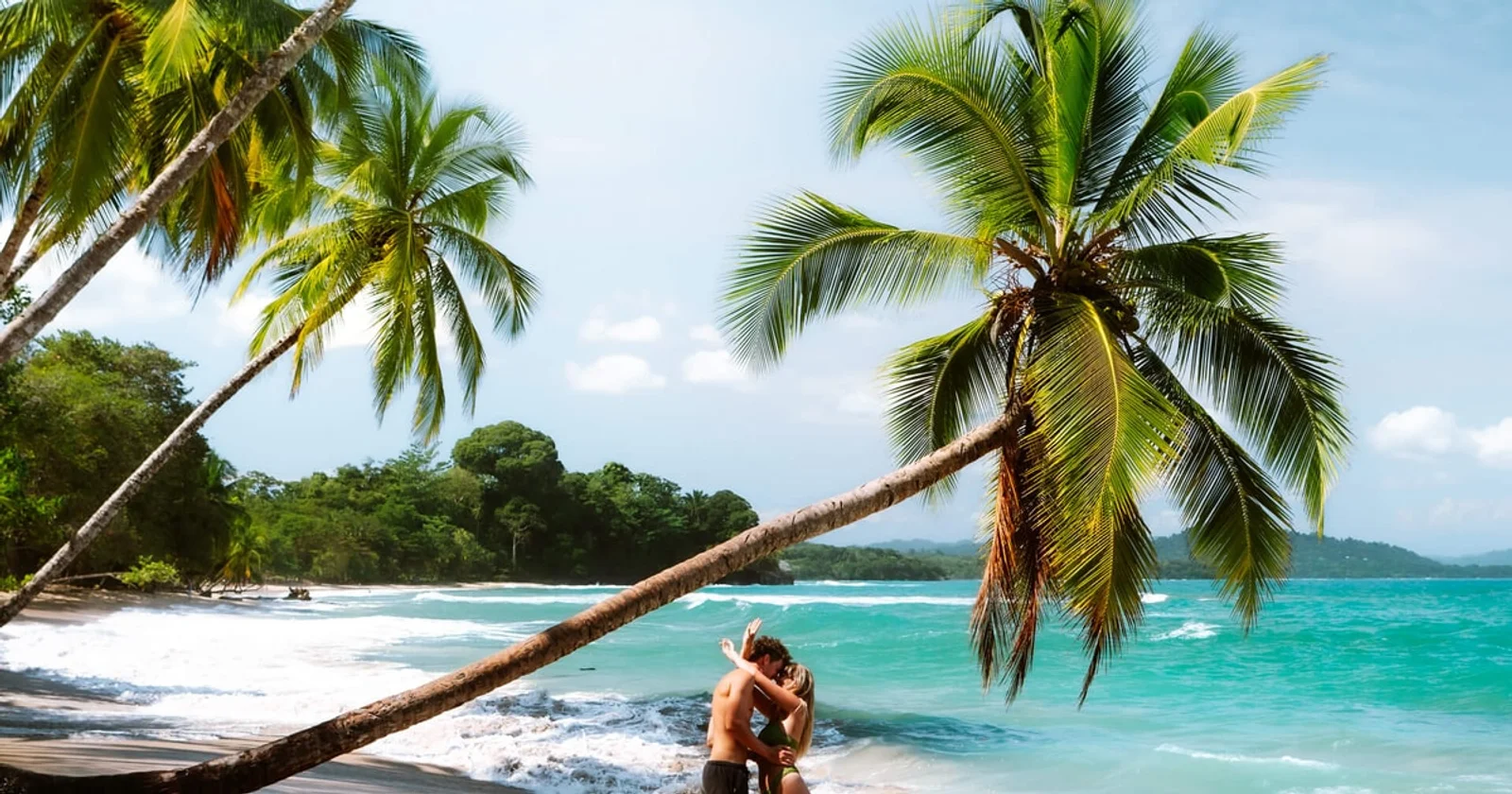
Puerto Viejo de Talamanca is a compact town. The name on booking sites is not compact at all. It gets stretched along the coast road running south, past Playa Negra, Playa Cocles, Playa Chiquita and Punta Uva, all the way to Manzanillo.
Properties along that whole stretch reasonably describe themselves as Puerto Viejo, because that is the town you fly and drive toward and the address people recognise. But a hotel near Punta Uva and a hotel two streets from the Puerto Viejo bakery are not the same trip. One has restaurants outside the door. The other has a beach outside the door and a road between you and dinner.
Neither is worse. They are different holidays, and the listing photo will not tell you which one you booked.
Before you reserve anything, find the property on a map and look for two things: what is within a short walk, and whether the road between you and the nearest cluster of restaurants is one you would happily travel after dark.
Our guide to where to stay in Puerto Viejo breaks the corridor down area by area once you have settled which kind of base you want.
The after-dark question, answered properly
Ask yourself how you plan to get from your bed to your dinner and back, on a Tuesday, in the rain.
Staying in central Puerto Viejo: you walk. That is the whole answer, and it is worth more than it sounds. You can change your mind at the last moment, eat somewhere different every night, and come home without arranging anything.
Staying in Cahuita: you also walk, within a smaller set of choices. Cahuita town is small enough that most of it is on foot from most places to stay. The evening is quieter and it ends earlier, which some couples come specifically for.
Staying along the corridor: you need a plan. Usually that means a rental car, a taxi arranged in advance, or a very early dinner. Bicycles are the local answer during daylight and they are genuinely pleasant, but cycling an unlit coastal road at night with a couple of drinks in you is a different proposition, and rental bikes do not always come with lights.
There is a version of the corridor stay that works beautifully, and it is the one where you have a car, or where your property has its own restaurant you are happy to eat at more than once.
Cahuita: what you are actually buying
Cahuita's draw is that the national park starts at the edge of town. You can be on a coastal forest trail without a transfer, a parking negotiation, or an early alarm. For couples who want wildlife to be part of the day rather than an excursion bolted onto it, that adjacency is the whole argument.
The town is smaller in every sense. Fewer restaurants, fewer shops, less noise, and a shorter evening. That reads as a downside on a comparison chart and as the entire point once you are there.
If the park is the reason you are considering the Caribbean side at all, read our Cahuita National Park guide before you choose, because it will tell you whether you want to be within walking distance of the entrance or happy to visit for a day from elsewhere.
Puerto Viejo town: what you are actually buying
Variety, and the ability to be indecisive without consequences. The town has the density of kitchens, bakeries, cafés and bars that lets a week go by without repeating yourself, plus the services that make life easy when the weather changes your plans.
It is also the natural base for reaching everything else, because the beaches run south from here and the buses, bikes and taxis all radiate from town. Our things to do in Puerto Viejo page covers what fills the days.
The honest tradeoff is noise. The centre has a nightlife, and depending on where you sleep, you will hear some of it. Couples who want early nights usually do better a little outside the centre or in Cahuita.
The beaches are not interchangeable, and that matters more than the town
This is where the corridor earns its reputation. Puerto Viejo's beaches each behave differently: Playa Negra's dark sand near town, Cocles with its surf, the smaller enclosed feel of Playa Chiquita, and Punta Uva, which is the one people describe when they talk about the Caribbean in their heads.
Two things worth knowing before you build a week around a photograph.
Conditions change, daily. Caribbean surf and currents vary by beach and by day. A shoreline that looks like a swimming pool one morning can be working hard by the afternoon. Ask at your hotel, ask a surf instructor, ask anyone who lives there, and take the answer seriously. If you are travelling with children or anyone who is not a confident swimmer, choose the beach on the day rather than from the itinerary.
Salsa Brava is not a swimming beach. It is a reef break with a reputation, and it is for experienced surfers. Cocles is the usual place for lessons.
Do you need a car?
No, but the answer changes the shape of your trip.
Without a car, staying in Cahuita or central Puerto Viejo is the comfortable choice. You walk to dinner, cycle to a beach in daylight, and take a taxi when it rains. It works.
With a car, the corridor opens up, and so does the option of a quiet property near Punta Uva or Manzanillo without the evening becoming a puzzle. If you are weighing this up alongside the rest of your route, our getting around Costa Rica guide covers where a rental helps and where it is just an expense with a parking problem.
Can you do both?
Yes, and often you should not bother.
Cahuita and Puerto Viejo are close enough that a day trip either way is straightforward, so a short Caribbean leg is usually better spent in one bed. Packing, checking out and moving costs you most of a day, and on a four or five night stay that is a real percentage of your holiday.
On a longer Caribbean leg, splitting works well and gives you two genuinely different weeks in miniature: the park and the quiet, then the town and the beaches. If you are coming from the capital, our San José to Puerto Viejo guide covers the journey itself, which is the part that deserves planning.
A word on when you come
The Caribbean coast does not follow the Pacific side's seasons, which catches people out when they apply a single national weather rule to the whole country. Rain is possible in most months here, and locals will tell you the calm, bright spells arrive on their own schedule.
The practical advice does not change much with the month. Keep a day flexible, do not book the whole week around one beach, and treat a wet morning as a reason to go to the park rather than a ruined day. For the wider picture, see our green season guide.
The way to get this right in one message
Everything above is a framework, and a framework still leaves you comparing three properties on a screen late at night.
The shortcut is to describe your ideal evening to someone who knows the coast, and let them point at the stretch. Tell us whether you want to walk out the door and pick a kitchen, or hear nothing but the sea and eat where you are staying. That one sentence usually settles Cahuita versus town versus corridor faster than an hour of reading.
Ask us. Send the dates you are looking at and the kind of evening you want, and we will tell you which part of this coast to sleep on, including when the answer is that the Caribbean is not the right leg for your trip at all.
For the full picture of the region, start with our Puerto Viejo travel guide.
Toorizta is how modern travelers plan, book and share Costa Rica trips. Open the app to build your own.
Open the Toorizta app