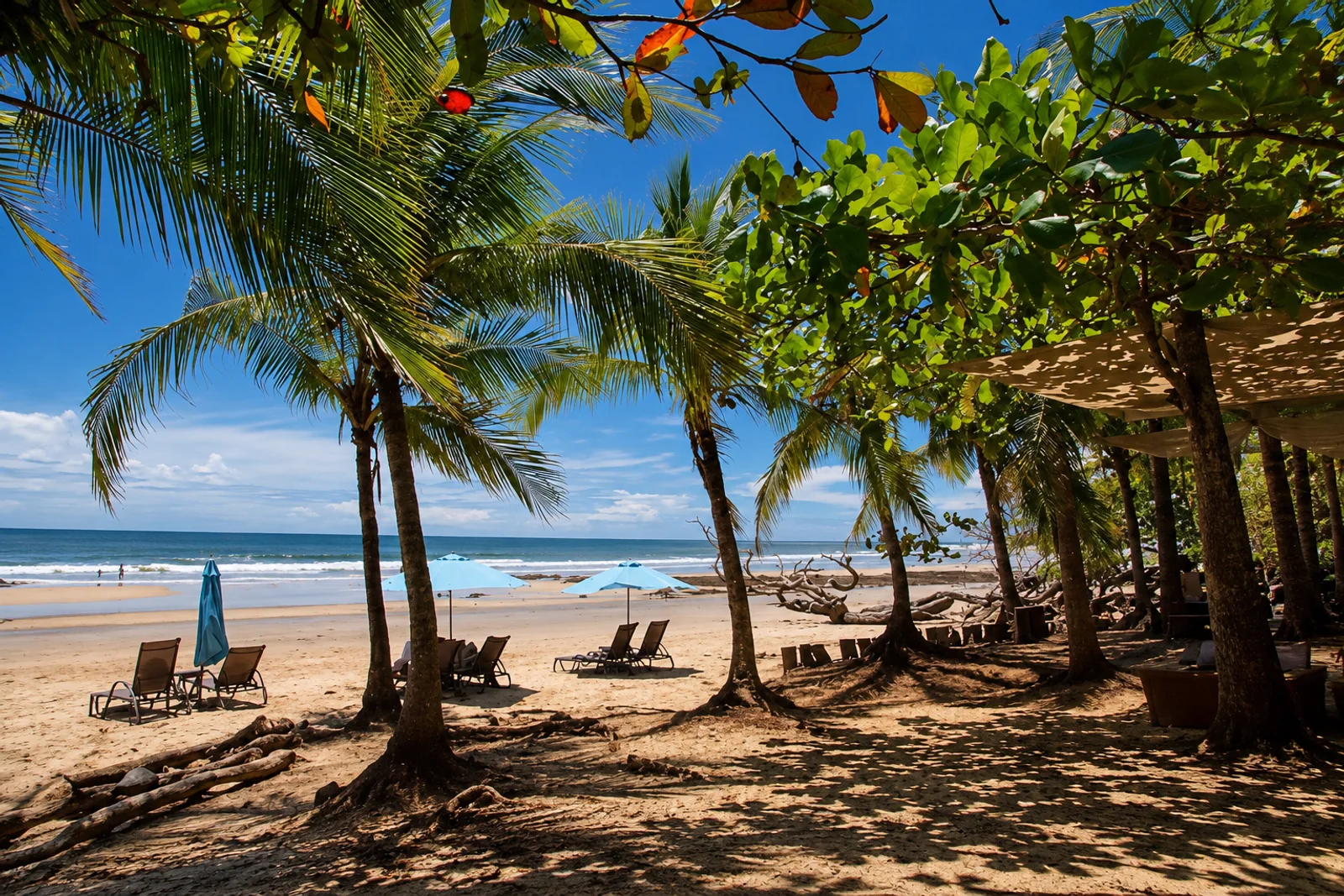
Where to Stay in Tamarindo: the Strip, Langosta, or Playa Grande
Two of the three beaches are national park, and the quiet one has no bridge
 Marta Daví
If you want quiet and still want to walk to dinner, book the south end of Tamarindo town. The strip in the middle is where the late noise lives. Playa Langosta is calmer but thin on places to eat. Playa Grande, across the estuary, is a different trip, because there is no bridge.
Tamarindo is small. It is one bay with a loud middle and three quiet edges, and the edges are not interchangeable. Choosing between them is the whole decision, and it matters more than which hotel you pick inside each one.
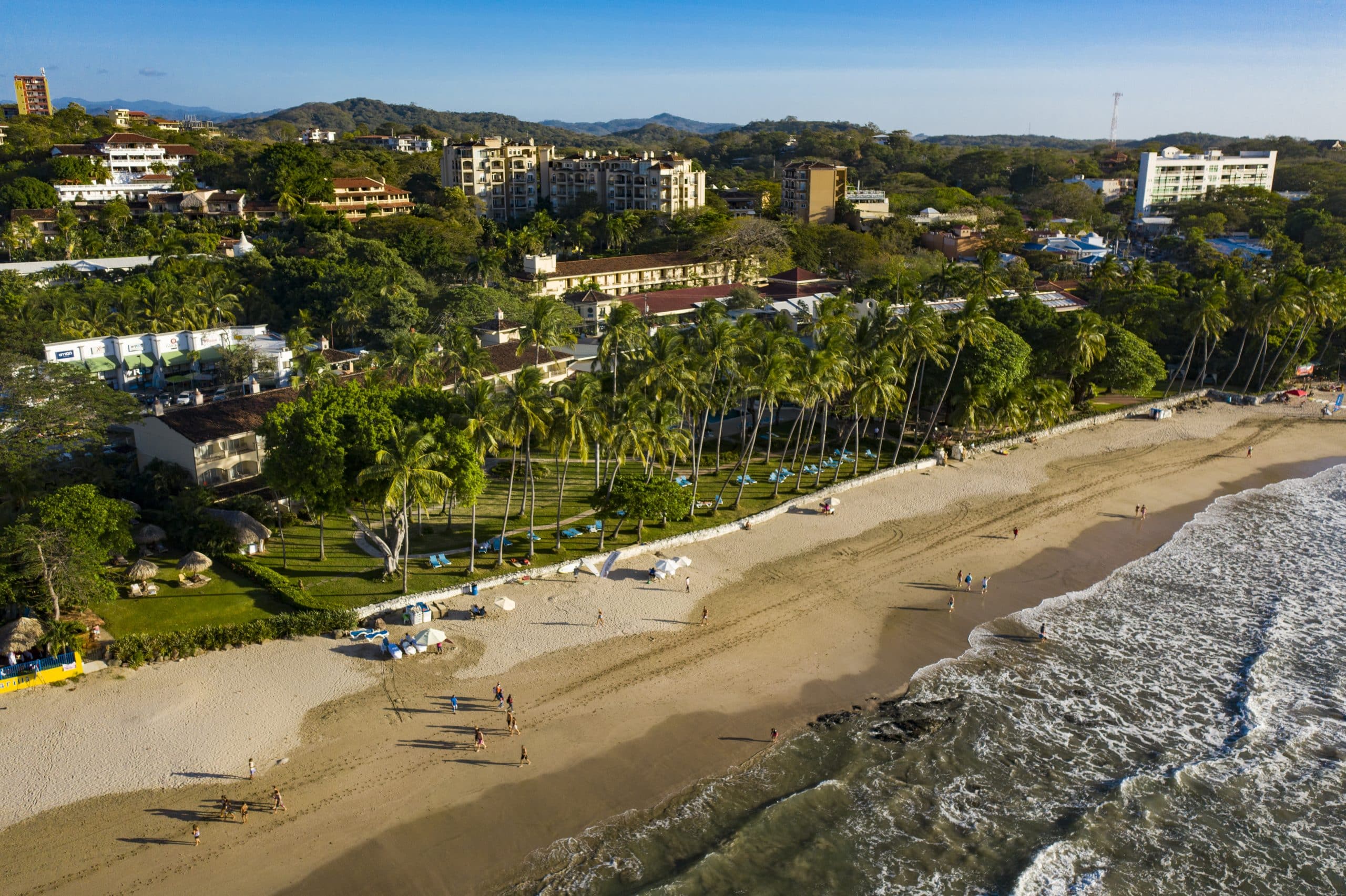 TamarindoCosta Rica
The five bases people actually choose between
| Base | What waking up there is like | Walk to dinner | Car or driver | Book it if |
|---|---|---|---|---|
| Town center and north end | Main road, surf shops, music late on weekends | Yes, to everything | No | You want the town and you sleep through noise |
| South end of town | Dirt side streets, howler monkeys, beach a few minutes on foot | Yes, a short walk | No | You want quiet and still want to walk |
| Playa Langosta | Residential, few businesses, protected nesting beach | Rarely, you ride into town | Helpful | You want calm and do not mind arranging rides |
| Playa Grande | Surf beach inside the national park, almost no services | No | Yes, or the estuary boat | Surf and turtles are the point of the trip |
| Hacienda Pinilla and Playa Avellanas | Gated resort land and a surf beach, both well south | No | Yes | You want a resort bubble or a surf first week |
The noise is real, and it is narrow
Travelers say this part plainly. "Yes it's a bit of expensive and could be noise that's why I always stay at Playa Langosta," one wrote on r/CostaRicaTravel. Another thread on the same forum is titled "In Tamarindo and I hate it." A third tells families to go "down by Langosta."
What they are all describing is a short run of the main road where the bars are. Walk south of it and the volume drops fast. So the useful question is not whether Tamarindo is loud, it is which side of your building faces that road. Ask before you book, and ask whether every bedroom has air conditioning, because a room you have to sleep in with the windows open is a different room on a Saturday night.
The south end: quiet without giving anything up
South of the center the streets turn to dirt, the buildings thin out, and the beach is still a few minutes away on foot. You keep the walk to restaurants and groceries and lose most of the noise. For a family with early bedtimes, this is the base that asks the least of you.
Howler monkeys are part of the deal here, and they start before dawn. Most people end up liking it. The ones who do not are usually the ones who booked for silence rather than for quiet.
Playa Langosta: calm, and a ride for most meals
Langosta is the next beach south, close enough that people walk between the two along the sand when the tide is low. It is residential. There are a handful of places to eat and no grocery run, so plan on going into Tamarindo for most meals.
 Langosta Beach ClubTamarindo, Costa RicaLocated on the beach, Langosta Beach Club offers a variety of dishes with a focus on fresh seafood. It's a great place to enjoy a meal with an ocean view.
One thing almost no accommodation guide tells you: Langosta is not just a quiet beach, it is inside a national park. SINAC's page for Marino Las Baulas National Park says the park was created to protect the leatherback turtles that nest at Playa Grande, Ventanas and Langosta. The sand in front of your hotel is protected beach, with the rules that come with it.
Playa Grande: the base with no bridge
Playa Grande sits directly across the estuary from the north end of Tamarindo beach. You can see it. You cannot drive to it directly. Small boats cross the estuary mouth, and the road route loops inland around the mangrove instead.
That is fine if you planned for it and awkward if you did not. A dinner reservation in Tamarindo means either the boat or the long way around, after dark, with children in the car.
Do not try to wade or swim across. The estuary is a crocodile channel, which is exactly why it is worth seeing from a boat with a guide instead. Our own estuary tour runs the mangrove for two hours with a naturalist, with pickup from Tamarindo and Langosta, from from $45 per person.

In our own hotel list, the Playa Grande side shows up as Hotel Cantarana, ONDA, Pipe House and Flor y Bambu, most of them in or near Palm Beach Estates, a short walk from the sand. There is no town around them. That is the trade: you get the surf beach and the nesting beach, and you give up walking anywhere else.
What the park rules mean for the sand in front of your room
If your trip falls between October and February, you are booking during nesting season. SINAC lists the leatherback spawning season for Las Baulas as October to February, and says that outside that season, staying on the beach is allowed until 5 p.m. Its own recommendations are blunt about behavior: turtles may not be photographed and may not be touched, and should be watched from behind, in silence.
Practically, that means night access to Playa Grande during nesting season is guided territory, not a late beach walk with a flashlight. If turtles are the reason you are coming, read what the park currently allows before you build the week around it, because it is narrower than the tour marketing suggests: Tamarindo turtle tours, what the park allows now.
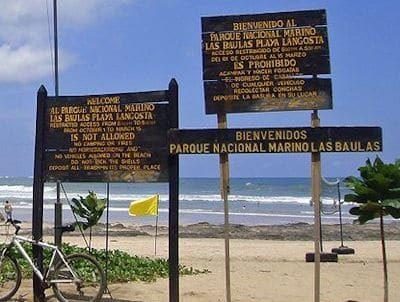 Las Baulas National Marine ParkTamarindo, Costa RicaNestled along the pristine shores of the Guanacaste Province in Costa Rica, Las Baulas National Marine Park stands as a testament to the country's commitment to conservation and the protection of its rich marine ecosystems. Named after the critically endangered leatherback sea turtles (known locally as “baulas”) that nest along its beaches, this biodiverse sanctuary offers visitors a unique opportunity to witness the wonders of marine life while contributing to its preservation. Key…
Is there an all-inclusive in Tamarindo?
Essentially one, and it is not in town. Travel + Leisure's Tamarindo guide names Occidental Tamarindo on Playa Langosta as the only all-inclusive in the area. If the all-inclusive format is what you want from Guanacaste, you have more choice up the coast toward Papagayo and Flamingo than you do here, and those are genuinely different weeks: where to stay on Playa Flamingo.
Tamarindo is a town where you walk out and eat. That is most of its appeal, and it is the reason the all-inclusive question usually answers itself once people understand the layout.
Do you need a rental car?
Not if you sleep in town. Everything in Tamarindo and the south end is walkable, and the beaches farther out are the only reason to have keys.
For the arrival itself, Liberia is the close airport. Our private transfer from LIR to Tamarindo is scheduled at about an hour and a quarter and starts from from $120 per vehicle (up to 4), and the shared shuttle on the same route starts from from $35 per person. From San Jose it is a long half day instead, which is worth knowing before you book flights into the wrong airport.
If a beginner surf lesson is on the list, note where they run: in the sheltered water of Tamarindo bay or over at Playa Grande, from from $89 per person. The calm bay in front of town is the gentle water. Langosta is not the beginner beach.

Four things to check before you confirm any Tamarindo booking
- How many minutes on foot to the sand, measured on a map rather than quoted in the listing.
- Which way the bedrooms face, and whether the building sits on the main road.
- Whether every bedroom has air conditioning, not just the master.
- Whether the address is in town, in Langosta, or across the estuary, because listings use "Tamarindo" for all three.
If your dates land over Christmas, New Year or Semana Santa, book early. Costa Rican families take the same week at the beach, and the dry season from December through April is when Guanacaste is busiest.
Ask us which end of the bay fits your week
Send us your dates, who is coming and what time you land in Liberia, and we will tell you which end of Tamarindo to sleep on, whether Langosta is worth the rides, and whether Playa Grande is the right call for your group or a logistics problem you do not need. If you are weighing Tamarindo against a quieter surf town, where to stay in Nosara covers the same decision one bay south.
Pura Vida.
Toorizta is how modern travelers plan, book and share Costa Rica trips. Open the app to build your own.
Open the Toorizta app