Where to Stay in Samara: the Town Grid, the Hill, or Playa Carrillo
Samara is small enough to walk end to end, which makes the usual beachfront filter useless and the walk home the thing that actually decides your week.
 Marta Daví
Stay in the town grid if you want to walk to dinner with children and walk back without thinking about it. Stay on the hill if the view matters more than the walk and you have a car. Stay at Playa Carrillo if you want the emptier beach and you are happy to drive in for groceries and restaurants.
That is the whole decision. Most people never get to make it, because they open a booking site, tick "beachfront", and get almost nothing back.
Why beachfront is the wrong filter in Samara
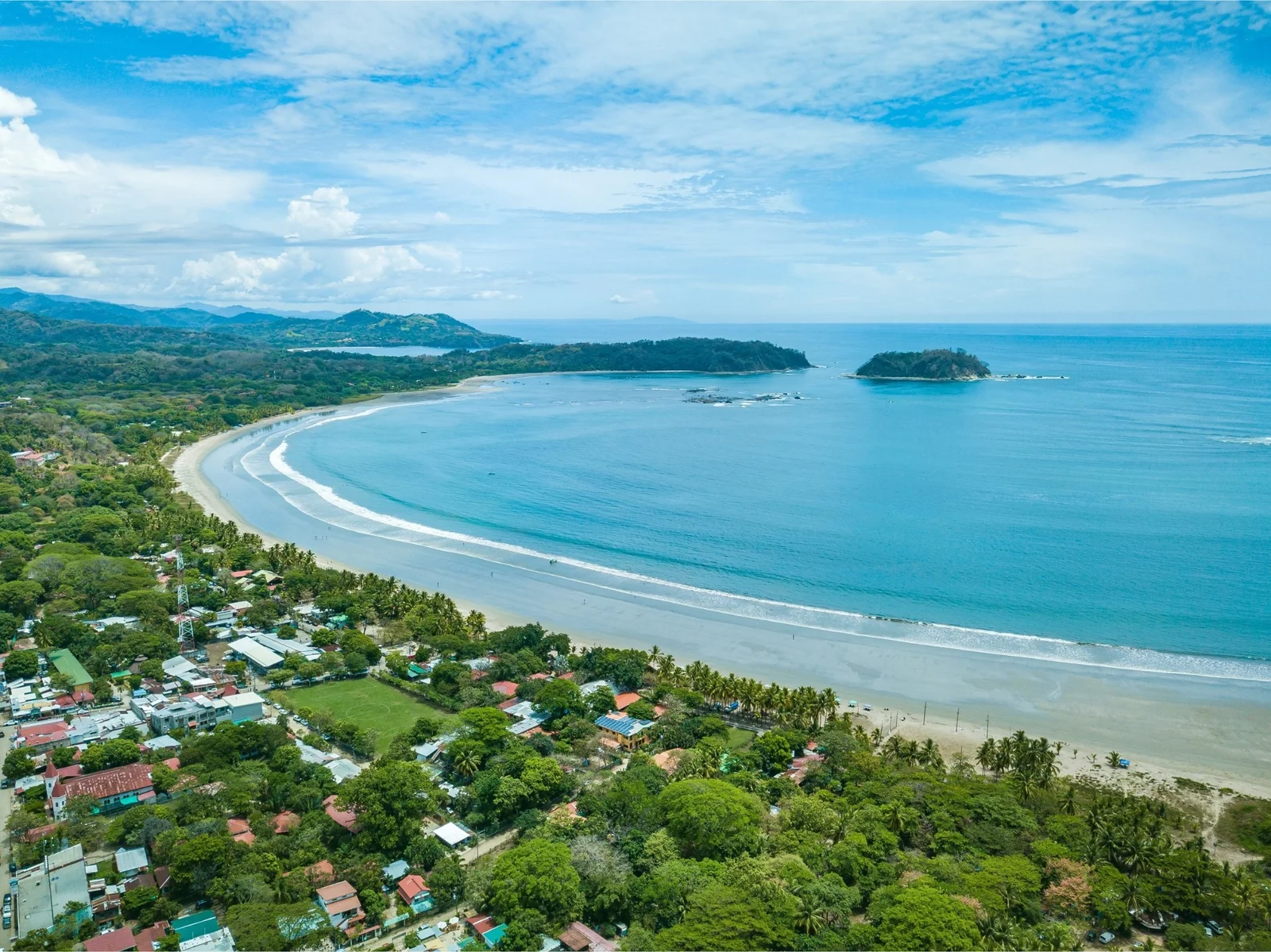
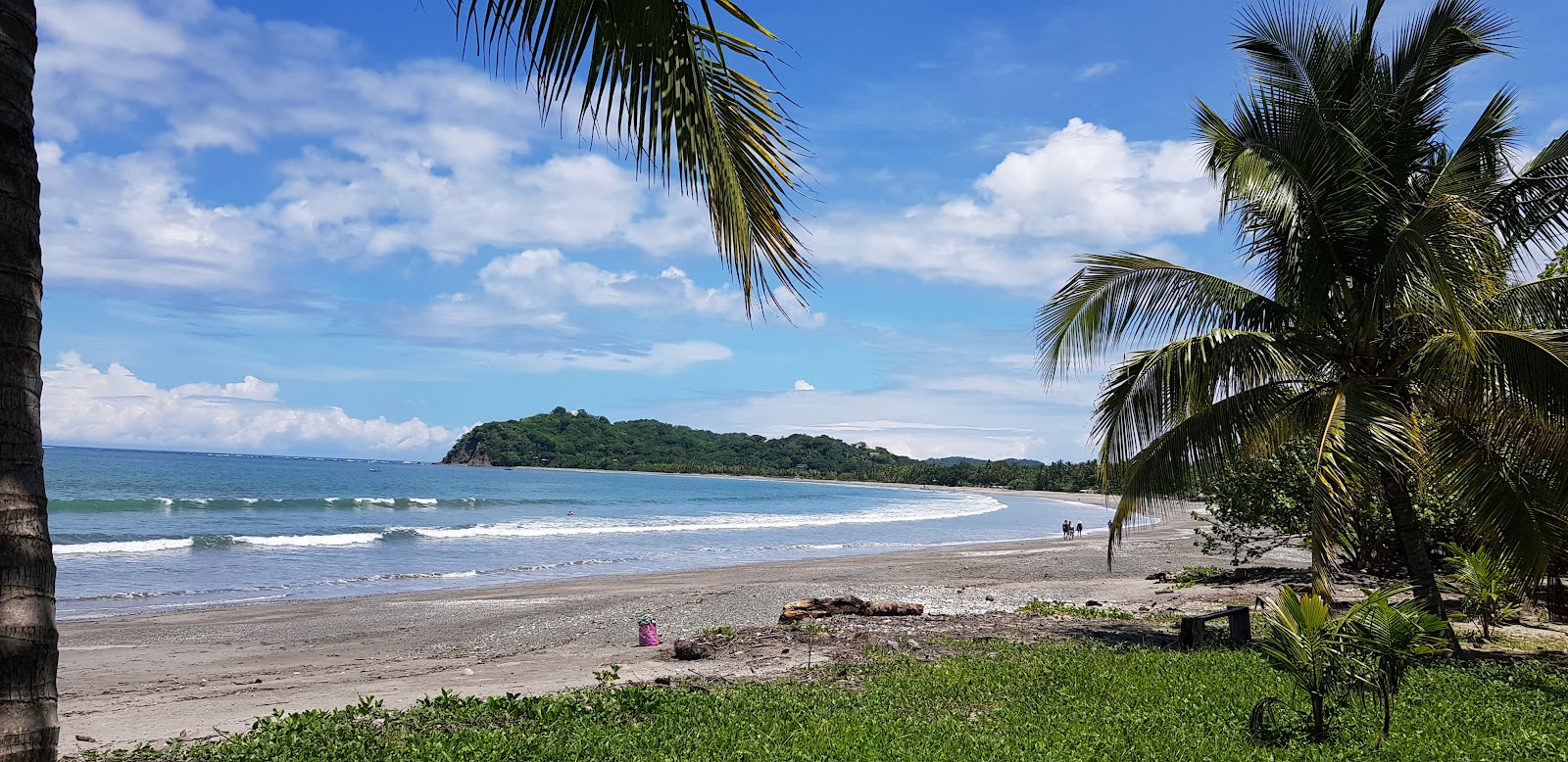
Samara sits behind its own beach. Between the town and the water there is a band of palms and public sand, and the beach itself is public, as every beach in Costa Rica is below the high tide line. A handful of places genuinely back onto that band. Most of what you will book is one, two or four streets behind it.
That reads like a downgrade until you see how small the town is. Travellers who have been describe it the same way every time: "you can walk the entire town." They mention the restaurants with tables in the sand, and they mention that nothing is far. Four streets back in Samara is a five minute stroll, not a transfer.
So the filter that changes your trip is not beachfront. It is how far you walk home after dinner, and whether any of that walk is uphill or unlit.
 SamaraCosta Rica
The three bases at a glance
Town grid | The hill | Playa Carrillo | |
|---|---|---|---|
Walk to restaurants | Yes, minutes | Mostly no | No |
Walk to the beach | Yes | Downhill out, uphill back | Yes, it is the beach |
Car needed | No | Yes, in practice | Yes |
Noise at night | Some, near the main street | Quiet | Very quiet |
Best for | Families, first timers, no car | Couples, views, longer stays | Quiet weeks, early risers |
The tradeoff | Less view, more street life | Every errand is a drive | You drive in for dinner |
The town grid
This is the few blocks between the main road in and the beach. It is where the sodas, the surf schools, the pharmacy and the small supermarkets are. It is also the only base in Samara where a family can arrive without a rental car and still have a normal week.
The honest cost is noise and plainness. Rooms here are generally simple, the street outside is a street, and on a Friday night the bars near the beach end are audible. Book at the beach end and you get the shortest walk and the most sound. Book two or three blocks back toward the main road and you trade a couple of minutes of walking for a quieter night, which for most families is the better deal.
What you get in return gets overlooked: nobody has to drive after dinner, and a child who has had enough can be back in the room in five minutes.
The hill
The land rises on either side of the bay, and the road east toward Carrillo climbs a headland as it leaves town. Up there you get the full horseshoe of the bay with the reef line showing offshore. You also get breeze, which counts for a lot in Guanacaste heat.
The cost is the walk. It is a pleasant downhill in the morning and a real climb at the end of a hot day, usually with no pavement and no lighting. In practice everyone staying on the hill drives, including to dinner, which means somebody in your group is not drinking.
Pick the hill if you are staying a week or more, you have a car anyway, and the view is part of what you came for. Skip it if you are here three nights and want to be in the water by nine each morning.
Playa Carrillo
Carrillo is the next bay around, a few minutes east by road. It is a long crescent of sand with a line of palms along it, a small village set back, and far fewer people on the beach than Samara. There is no real restaurant strip, which is both the appeal and the catch.
Base here if your week is beach, book, nap, repeat, and you want to cook some of your own meals. Do not base here if you want to walk out and choose between six places for dinner, because you will be driving back into Samara to do it most nights.

Does the bay really swim the way people say it does?
Yes, and there is a physical reason for it. Samara is a horseshoe bay with a reef sitting across its mouth. The reef takes the force out of the incoming swell, so what reaches the sand is small and the gradient is gentle. That is why the surf schools here teach beginners and why families keep choosing it.
You will see Samara called one of the safest beaches in the country. Treat that as a description of the shape of the bay rather than a guarantee. Conditions change with tide and weather anywhere on the Pacific coast, rip currents exist on calm looking beaches, and no reef removes the need to watch your own children in the water.
One traveller put the family case plainly: "My favorite beach for families is easily Samara. It's beautiful, swimmable, walkable, and more of a Costa Rican feel than Jaco or Tamarindo."
Getting there, and whether you need a car
The road in is paved. Route 150 runs from Nicoya down to Samara and continues to Carrillo on asphalt, so this is not one of the Nicoya Peninsula drives that needs a four wheel drive or a river crossing. Coming from Liberia airport the surface is sealed the whole way, though the hours depend on where exactly you start, and we would rather work that out with you than print a number that is wrong for your route.
There is an airstrip serving the Samara and Carrillo area, and the Costa Rican Tourism Board's regional guide lists small domestic flights to it (ICT, Guanacaste Sur guide). Scheduled service to the small Guanacaste strips has come and gone over the years, and at least one other source describes the field as charter only, so confirm directly with the airline before you build a connection around it.
On the car question: staying in the town grid for three or four nights, you do not need one. On the hill or at Carrillo, you do. To reach Camaronal to the south or Ostional to the north, you do, and Ostional is a longer drive than the map suggests.
Our guide to renting a car in Costa Rica covers the insurance question that catches most people out.
How many nights is Samara worth?
Three to four if Samara is a stop on a larger loop. A week if it is the trip and you want a base rather than a tour.
The common verdict is fair enough: "Samara is fine to check out but no more than 3 days." That comes from people who treated it as a sightseeing destination and ran out of sights. Treat it instead as a place to swim, eat and let children be feral for a week, and the same smallness that bores one traveller is exactly what another is paying for. Work out which one you are before you book seven nights.
Samara or Nosara?
They are an hour or so apart on the same coast and they are not interchangeable. Nosara is spread out, wellness and surf oriented, more expensive, and effectively requires a car. Samara is concentrated, cheaper, swimmable for small children, and walkable.
Opinions split hard. One regular visitor says "We often stay in Samara and visit Nosara all the time." Another says "I would without a doubt recommend Nosara over Samara." Both are telling the truth about themselves. If your group contains a seven year old who wants to be in the water, Samara wins. If it contains two surfers and a yoga practice, read our Nosara guide next.
If you are weighing the whole peninsula, Santa Teresa is the third option, and it is the furthest from an airport of the three.
Still not sure which one is yours?
Tell us who is coming, how many nights you have, and whether anyone in the group wants to be in the water on day one. We will tell you which of the three bases fits, and we will tell you if Samara is the wrong town for your week entirely.
Message us and ask. Pura Vida.
Toorizta is how modern travelers plan, book and share Costa Rica trips. Open the app to build your own.
Open the Toorizta app