Tárcoles Crocodile Bridge: Is the Stop Worth It, or Should You Take the Boat?
A free 15-minute look from Route 34, or close crocodiles from a boat on the river. How to choose.
 Dallas Rogers
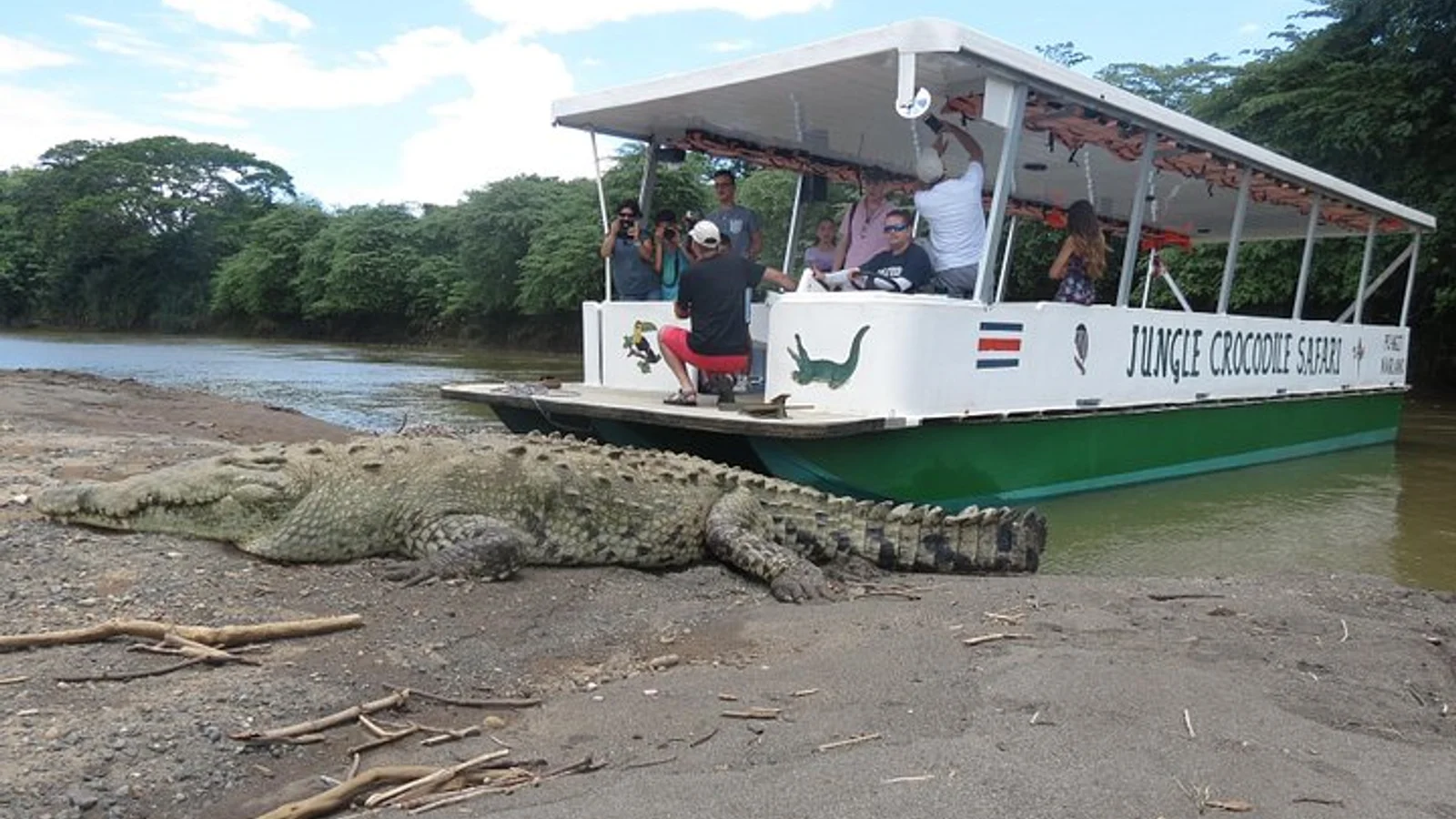
Short answer: yes, stop at the Tárcoles Crocodile Bridge if you are already driving Route 34 between San José and Jaco or Manuel Antonio. It is free, it takes about 15 minutes, and on a good day you look down on American crocodiles lying on the sandbanks of the Tárcoles River. The long reinforcement works on the bridge were finished in September 2026, and it now has new railings. If you want to see the crocodiles up close and learn what you are looking at, take the river boat tour from Tárcoles. It runs about 1 hour 45 minutes.
TL;DR
| Tárcoles Crocodile Bridge | Tárcoles River boat tour | |
|---|---|---|
| Cost | Free (a small tip for the parking attendant is customary) | From from $40 per person |
| Time | 10 to 20 minutes | 1 hour 45 minutes |
| Getting there | Drive Route 34 and park at the north end of the bridge | Drive yourself to the dock in Tárcoles (no hotel pickup) |
| How close | Looking down from the bridge deck | On the water, with a guide |
| Crocodiles guaranteed? | No. Some days you see many, some days very few | No guarantee either, but the boat can go to where they are |
| Best for | A leg stretch on a driving day | Families, photographers, anyone who wants the full story |
What changed at the bridge in 2026
For much of 2025 and 2026, the bridge over the Tárcoles River on Route 34 was a work zone. Drivers reported long lane closures, and people asking on r/CostaRicaTravel were told "since the construction on the bridge the crocodiles are scarce."
Costa Rica's Ministry of Public Works (MOPT) announced on 28 September 2026 that the work is finished. The 341-meter bridge was seismically reinforced. Its deck now gives a firm, level surface for pedestrian and vehicle traffic, and the old railings were replaced with stronger ones. Before the works, people already walked the bridge to look at the crocodiles. Now that the works are finished, you can do that again.
The crocodiles' habits did not change with the bridge. The ones below are American crocodiles (Crocodylus acutus), and how many you see depends on the river. The travel writers at Two Weeks in Costa Rica noticed that when the water was high, most crocodiles stayed in the water. When it was low, more of them lay in groups on the banks. In the green season (roughly May to November) the river runs higher and browner, so count on fewer crocodiles basking in plain view. You can still get a lot from the stop. The river is wide, the birdlife is busy, and a big crocodile sliding into the current still makes everyone on the bridge go quiet.

Where it is and how long to stop
The bridge carries Route 34, the coastal highway down the Central Pacific. Two Weeks in Costa Rica puts it at about an hour to an hour and a quarter from San José airport (SJO) and about 30 minutes north of Jaco. That makes it a natural first break on the drive from SJO to Jaco, Manuel Antonio or Uvita, or a short outing from Jaco itself. If you are building a few days around Jaco, our guide to things to do in Jaco lays out what to book first and how long each outing takes.
Most people spend 10 to 15 minutes. Walk out to the middle of the bridge on both sides, because each side looks onto a different stretch of river and the crocodiles are not always on the same one.
How to stop safely
The real risks here have little to do with the crocodiles. They come from traffic and from parked cars:
- Park at the north end, off the highway. Coming from San José, you reach a cluster of souvenir stands, small sodas and shops just before the bridge. That is where you park. Never stop on the shoulder or on the bridge itself.
- Tip the attendant. Informal parking attendants wave cars in and keep an eye on them. They work for tips, so a coin or small bill when you leave is customary.
- If your luggage is in the car, take turns. This parking area had a long reputation for break-ins. The advice travelers give each other on Reddit and TripAdvisor is the same every time: one person stays with the car while the others walk out, then you swap. For a quick look with nothing in the car, this matters less.
- Hold children's hands. The new railings are sturdier, but the walkway runs right next to a busy two-lane highway with trucks on it. Cross back at the parking area, not over the barriers.
- Never feed the crocodiles, and never go down to the riverbank. Feeding wildlife is illegal in Costa Rica, and it teaches crocodiles to link people with food. Everything worth seeing is visible from the bridge.

When the boat tour is the better choice
From the bridge, the crocodiles are small shapes on a sandbank. From a boat you are much closer. You see the armored ridges along a crocodile's back, the slow blink of an eye at the waterline, and how big the animal is next to the boat. If seeing a crocodile is the point of your day and not a stop on the way somewhere else, the boat is the better choice.
The tour we offer, Jungle Crocodile Safari on the Tárcoles River, is a guided 1 hour 45 minute trip on the river, in groups of up to 15. The guide watches for crocodiles, including large adults the operator describes as over 4 meters long, and for the tropical birds that work the riverbanks and mangroves. You can cancel for a full refund up to 24 hours before departure.
The tour does not include hotel pickup from Jaco or anywhere else. You drive yourself to the dock in Tárcoles, and the exact meeting point comes in your booking confirmation email. The operator lists private parking and wheelchair-accessible facilities, so the car stays parked while you are on the river and you don't have to watch it the way you would at the bridge.
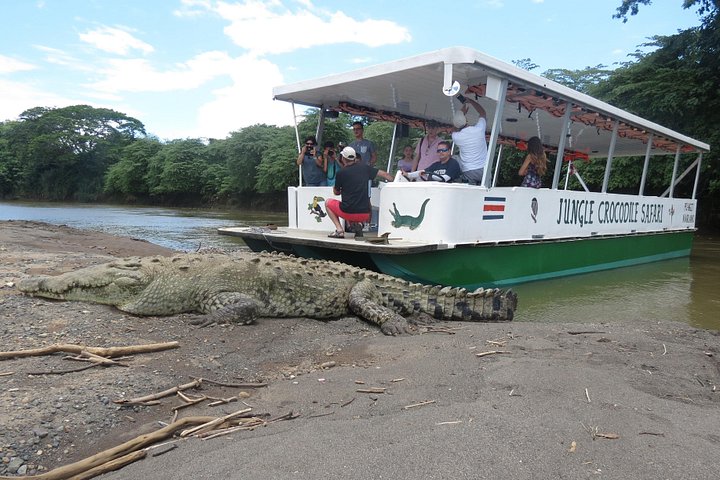 Jungle Crocodile Safari: Tarcoles River Crocodile TourJaco, Costa Rica
Choose the boat if:
- You have children who will remember a crocodile next to the boat far longer than a speck on a sandbank.
- You have a car in Jaco and want a half-morning outing, not a highway stop.
- You came in the green season, when high water can leave the bridge view thin.
- You want a guide to explain what you are seeing instead of guessing.
Choose the bridge if you are mid-drive with luggage, short on time, or just want a look before carrying on south.
Pair it with Carara National Park
Carara National Park is on the same stretch of Route 34. It is one of the best places in the Central Pacific to look for scarlet macaws, and you can visit it in the same morning as the river. A common plan from Jaco is Carara early, when the forest is cooler and birds are active, then the crocodile boat or the bridge on the way back. Our post on Carara from Jaco covers which trail to walk and whether a guide is worth it. If you want a guide, there is a guided visit to Carara with the park ticket included.

Not sure how it fits your drive?
The bridge is easy to add. Fitting it into a long transfer day without arriving in Manuel Antonio after dark is harder. If you are not driving yourself, getting to the Tárcoles dock needs planning too. Tell us your flight time, where you are sleeping, and whether you are traveling with kids, luggage or a rental car, and Dallas and Marta will help you decide where Tárcoles goes in the day, or whether the boat tour deserves its own morning from Jaco. Send us a message and ask.
Part of the Jaco guide
Things to do: the main guide
More on things to do in Jaco
Toorizta is how modern travelers plan, book and share Central America trips. Open the app to build your own.
Open the Toorizta app