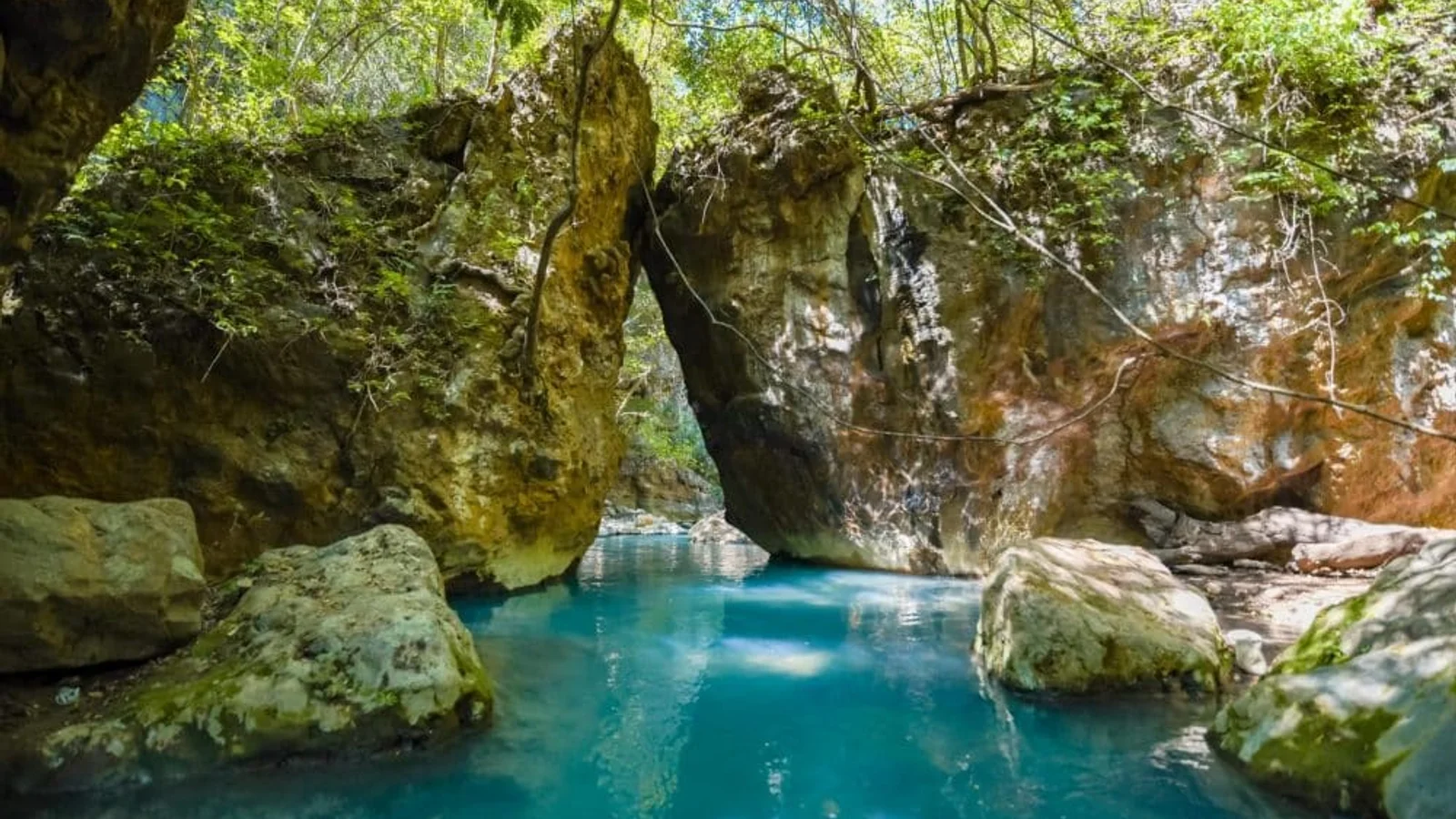
Papagayo Gulf Day Trips: Which One to Book, and the Days the Parks Are Shut
A boat morning, a waterfall day, or the volcano. On this coast the park calendar and the clock decide before the brochure does.
 Marta Daví
If you are based on the Papagayo Gulf with one free day to spend away from the pool, book it for the morning and build it around a park calendar rather than a brochure. Three day trips sit within comfortable reach of Playa Panama, Playa Hermosa, Playas del Coco and the Papagayo Peninsula: a boat morning in the gulf's own bays, a wildlife and waterfall day inland, and the volcanic day at Rincón de la Vieja National Park. The Bat Islands are a fourth option and a different kind of trip entirely, because they sit inside Santa Rosa National Park's marine sector.
Short version, before the detail:
- The Las Pailas sector of Rincón de la Vieja National Park is closed on Mondays and open Tuesday to Sunday, 8:00 am to 3:00 pm.
- The Rincón de la Vieja waterfall trail to La Cangreja stops admitting walkers at noon in the dry season, December to April.
- Rincón de la Vieja and Santa Rosa tickets are sold only through SINAC's online reservation system, not at the gate.
- The Islas Murciélago, known in English as the Bat Islands, lie in Santa Rosa National Park's marine sector, which SINAC says is reached only by sea from nearby communities and whose availability you have to confirm with the park administration.
- Green season mornings are the dry part of the day. SINAC's own Rincón de la Vieja page recommends walking in the morning from May to November because afternoons bring rain.
Which day trip should you book first?
Book the boat morning if your group wants water and a short travel day, book the inland wildlife and waterfall day if you have children who need shade and swimming, and book Rincón de la Vieja if someone in the group came to Costa Rica to stand next to boiling mud. Most Papagayo stays are short, so one strong day usually beats three rushed ones.
| The day | What it actually is | When it runs | What decides it |
|---|---|---|---|
| Boat morning in the gulf | Bays and beaches reached by water from Playas del Coco or the Papagayo marinas, with snorkel stops and swimming | Operator schedules, most departures early or at sunset | Wind and chop, which build through the afternoon on this coast |
| Wildlife and waterfall day inland | A guided sloth and birding walk plus a waterfall swim or a hot springs stop on the Rincón de la Vieja foothills | Private reserves and ranches set their own hours | Afternoon rain from May to November, and how much driving your group tolerates |
| Rincón de la Vieja, Las Pailas sector | A 3 km loop past fumaroles, mud pots and a fumarolic lagoon, about two hours of walking | Tuesday to Sunday, 8:00 am to 3:00 pm. Closed Monday | The Monday closure, and online-only tickets |
| Rincón de la Vieja, Santa María sector | Quieter trails, hot springs, a longer approach | Thursday to Monday, 8:00 am to 3:30 pm. Closed Tuesday and Wednesday | Its own two closed days, which are not the same as Las Pailas |
| Islas Murciélago, by sea | A long offshore day, mostly dive boats, into Santa Rosa's marine sector | Sea access only, availability confirmed with park administration | The crossing, the swell, and whether the sector is open |
Fees at both Rincón de la Vieja and Santa Rosa are the same on the SINAC and Área de Conservación Guanacaste pages we read on 1 October 2026: $16.95 for a non-resident adult and $5.65 for a non-resident child. Tour prices sit on top of that, and plenty of passes leave the park fee for you to pay, so ask any operator whether the entrance is included before you book.
Why the morning is not a preference, it is the plan
SINAC's Rincón de la Vieja page states the seasons plainly: dry from December to April, rainy from May to November, with sunny mornings and wet afternoons through the green season, which is why the park itself recommends doing the walks in the morning.
The same page sets hard gates. Entry to the waterfall trail is possible from 8:00 am until noon in the dry season, and access during the rainy season may be regulated by the sector administration. The Las Pailas loop closes its day at 3:00 pm. A 9:00 am pickup from Playa Panama, which feels civilised on holiday, can mean arriving with the waterfall trail already closed behind you.
Wind matters here too, and the park says so in writing. SINAC lists gusts above 60 to 80 km/h during the first months of the dry season among the conditions that make the active crater trail inaccessible, and notes that March and April usually bring the calmest, clearest conditions at altitude. That trail is closed anyway for volcanic activity, but the wind pattern is the same one that puts chop on the gulf by mid afternoon. Book boats early.
If you want to see what the coast is doing before you commit, the Instituto Meteorológico Nacional publishes a regional forecast for the Pacífico Norte, the region the Papagayo Gulf sits in, at imn.ac.cr. Read it the evening before, not the morning of.
The wildlife day, and whether a guide earns the money
A sloth is a grey lump thirty metres up a tree until someone with a spotting scope puts it in focus. That is the whole argument for a naturalist guide on the inland day, and it is the difference between a family saying they saw nothing and a family talking about the baby on its mother's back for the rest of the week.

On the gulf's own trails and in the private reserves inland, the guide is also the person who knows which tree fruited this week. On a national park loop like Las Pailas, where the attraction is geothermal and self explanatory, a guide is a nice addition rather than the thing that makes the day work.
The volcano day, with or without the hot water
Las Pailas gives you the volcanic theatre in a compact loop: boiling mud, steam vents, a small volcancito, with the forest changing from dry to humid as you walk. SINAC puts the surface temperatures of those features between 78 °C and 106 °C, which is a number worth repeating to anyone in your group who likes to step off a trail for a photograph.
The hot springs and mud baths that most Papagayo guests end up in are private operations on the volcano's flanks rather than part of the national park, so their hours and prices are their own. They pair well with a morning in the park and they rescue a rained out afternoon.

If the volcano is the reason you came to Guanacaste, our two Liberia pieces go deeper on choosing between the mud pots and the waterfalls, and on the tickets most passes quietly leave to you: mud pots or waterfalls, and the two deadlines that decide and which day to book, and the ticket nobody mentions.
What about the Bat Islands?
The Islas Murciélago are real and they are genuinely good, and they are not a casual snorkel stop from a resort beach. They lie in the marine sector of Santa Rosa National Park, which SINAC describes as accessible only by sea from nearby communities, with a recommendation to check with the administrative offices whether the sector is currently open to visits. That is the park's own language, and it is the first thing to settle before anyone pays for a boat.
The land side gives you a sense of the scale. Sector Murciélago, on the Santa Elena peninsula, is open Thursday to Tuesday, 8:00 am to 4:00 pm, with a last entry at 2:00 pm, and Área de Conservación Guanacaste's current notice says access is on foot or by bicycle only. There is no public transport to it, since buses reach Cuajiniquil and the sector is 9 km further on, and there is no mobile signal at the site. Santa Rosa's historic sector keeps different hours again, Wednesday to Monday, 8:00 am to 3:30 pm, with advance reservation.
Translated into holiday terms: the Bat Islands are a committed dive day for certified divers, booked with an operator who runs that crossing regularly. Most boat tours sold as Papagayo snorkelling stay inside the gulf, at beaches like Playa Huevos, and that is the right call for a family morning.
One, two, or three days out
For three or four nights on the gulf, pick one day out and keep the rest for the beach. For a week, the sequence that tends to work is a boat morning early in the stay, a volcano day mid week, booked on a day that is not Monday, and an inland wildlife morning before you fly, since it needs the least recovery.
Build the park day first, because it is the one with the fixed calendar, then fit the boat around it. A sailing schedule can flex. Las Pailas on a Monday cannot.
Ask us before you book the wrong day
Send us your dates, who is travelling, and how early your group is honestly willing to leave, and we will tell you which single day is worth booking from the Papagayo Gulf and which one to skip. If you are still choosing where on the gulf to stay, or you landed at Liberia and need the first night sorted, we wrote about landing at Liberia and choosing between the airport strip, the town and driving on too.
Pura Vida 🌿
Sources
- SINAC, Parque Nacional Rincón de la Vieja, hours, fees, trail entry times, climate and wind notes, read 1 October 2026.
- SINAC, Parque Nacional Santa Rosa, hours, fees, sectors and marine sector access, read 1 October 2026.
- Área de Conservación Guanacaste, Sector Murciélago, hours, last entry, access on foot or by bicycle, transport and signal notes, read 1 October 2026.
- Instituto Meteorológico Nacional, Reporte pronóstico regional, Pacífico Norte.
Toorizta is how modern travelers plan, book and share Costa Rica trips. Open the app to build your own.
Open the Toorizta app